Wherever You Are
By Martin Fulmer
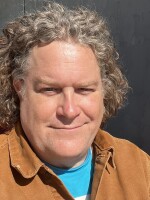
I’m Martin Fulmer from Goodwell, OK, here for the HPPR Radio Readers Book Club’s 2026 Fall Read.
One of the things that makes Lauren Groff’s Florida so compelling is the way weather refuses to stay in the background. Storms do more than change the sky. They interrupt plans, expose vulnerabilities, and make people see one another differently.
That is especially true in “Salvador.”
The story takes us far from Florida, to Salvador, Brazil, where a woman who grew up in Miami finds herself caught in a violent tropical storm. The setting may seem distant from the High Plains, but the feeling of the storm did not seem distant to me at all. Reading it, I remembered Tropical Storm Bertha and a summer job I had outside Charleston, South Carolina.
I was working on a golf course maintenance crew, helping prepare the course for a tournament. As the weather deteriorated, I was sent out with a leaf blower.
I still laugh when I think about it.
There is something almost absurd about carrying a machine designed to blow air into a tropical storm, as if a little gasoline-powered wind might somehow impose order on the much larger wind moving in from the coast. But at the time, it was simply work. The tournament was coming. The course needed to be ready. We kept doing what we normally did until the weather made normal impossible.
That memory helped me understand something in Groff’s “Salvador.” Her storms are not just spectacles. They disrupt the small arrangements people make to feel secure: schedules, assumptions, judgments, routines. Once the storm arrives, those arrangements begin to fall apart.
In “Salvador,” the woman is already far from home when the weather turns. Distance has given her a temporary escape, but the storm makes that escape feel fragile. In the middle of unfamiliar streets, unfamiliar people, and dangerous weather, she has to decide whom to trust. Groff lets fear and uncertainty gather with the storm itself.
What makes the story memorable, though, is that the storm also creates an unexpected kind of closeness. Afterward, the world has not become safer or easier, but another person has become more recognizable as a fellow human being. The storm has altered not only the landscape but the way she sees.
That feels true to my own experience of severe weather. During Bertha, what I remember most now is not a dramatic image of destruction. I remember the foolishness and persistence of ordinary life: people trying to finish a job, prepare a golf course, keep a tournament on schedule. Weather has a way of showing us how temporary our sense of control really is.
And that is one reason I think High Plains readers may find more familiar territory in Florida than they expect. The vegetation is different. The humidity is different. The storms have different names. But anyone who has watched the sky darken over an exposed landscape knows something about the moment when weather becomes larger than whatever plans we had made.
By the end of “Salvador,” Miami—and the woman’s childhood home there—comes back into view. She has traveled far, but home has not disappeared. Perhaps that is another thing storms do. They remind us where we have been, what we carry with us, and how little distance can erase.
I’m Martin Fulmer from Goodwell, OK, for the HPPR Radio Readers Book Club’s 2026 Fall Read.

Martin Fulmer is an Assistant Professor of English and Director of the Writing Center at Oklahoma Panhandle State University. His fiction and creative nonfiction have appeared in Story Quarterly, Burrow Press Review, Story South, and other literary journals. He lives and works in Oklahoma with his dogs, Rose and Hector.