“Eyewall” Drew Me In
By Martin Fulmer
I’m Martin Fulmer from Goodwell, OK, here for the HPPR Radio Readers Book Club’s 2026 Fall Read.
When people hear the title Florida, they may picture beaches, palm trees, theme parks, or winter escapes. Lauren Groff’s Florida is a different place. It is lush and beautiful, but also humid, overgrown, unpredictable, and sometimes dangerous. Snakes, storms, sinkholes, and other threats linger near ordinary life. The natural world is never merely scenery. It presses in on the people who live there.
That is especially true in “Eyewall,” one of the stories that drew me most deeply into the collection.
The story follows an unnamed woman who chooses to remain alone in her old Florida house as a hurricane approaches. As the storm intensifies, so does the strangeness inside the house. People she has lost seem to return to her, and the boundaries between storm, memory, fear, and imagination begin to blur. Groff makes the hurricane feel at once brutally physical and strangely intimate. The storm outside seems to open doors to storms the woman has carried within her.
Reading “Eyewall” took me back to September 1989, when Hurricane Hugo came ashore in South Carolina. I was fifteen years old. What I remember most clearly from that night is waking to the sound of the wind. Not thunder. Not rain. Wind. It was loud enough, and unfamiliar enough, to wake me.
By morning, the world outside looked different. Trees were down. Roads were blocked. We lost electricity for about a week. A neighbor shared well water with us while crews cleared debris and repaired power lines. Schools remained closed for days. For a while, the routines that normally organized our lives simply disappeared.
That memory helps me understand something Groff captures in “Eyewall”: a hurricane is more than a dramatic few hours of wind and rain. It changes the scale of things. The ordinary protections of a house, electricity, roads, schedules, even our confidence that tomorrow will resemble today can suddenly seem fragile.
This is one reason I hope readers will give Florida a chance, especially here on the High Plains, where Groff’s subtropical landscape may initially feel far removed from our own. The particulars are different, but the experience of living beneath a powerful sky is not. High Plains readers know what it means to watch weather gather on the horizon and to understand that nature does not require our permission before rearranging our plans.
Groff’s darker vision of Florida may not be the Florida of vacation brochures, but that is precisely what makes the collection so compelling. Her characters inhabit a world that is beautiful because it is wild and frightening for the same reason.
In my earlier reading of Heaven’s Breath, I found myself thinking about how easily we stop noticing the wind because it is always there. “Eyewall” offers the other side of that thought. Sometimes the wind refuses to remain in the background. Sometimes it arrives with a name.
And years later, you can still remember the sound of it.
I’m Martin Fulmer from Goodwell, OK, here for the HPPR Radio Readers Book Club’s 2026 Fall Read.

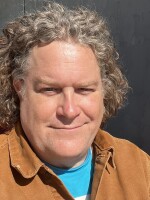
Martin Fulmer is an Assistant Professor of English and Director of the Writing Center at Oklahoma Panhandle State University. His fiction and creative nonfiction have appeared in Story Quarterly, Burrow Press Review, Story South, and other literary journals. He lives and works in Oklahoma with his dogs, Rose and Hector.