Watching Wind’s Power is a Common Experience
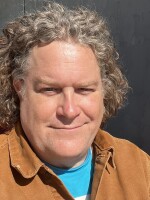
By Martin Fulmer
I’m Martin Fulmer from Goodwell, OK, here for the HPPR Radio Readers Book Club’s 2026 Fall Read.
By the time I reached Lauren Groff’s story “Above and Below,” I had begun to understand that Florida is not only interested in storms as dramatic events. Groff is interested in what weather does to people before, during, and after it passes—and in the ways weather can become part of how we think about ourselves.
That may be one reason this collection can feel unfamiliar to readers on the High Plains.
Groff’s Florida is humid, coastal, overgrown, and often threatening. But the experience of living under a powerful sky is not unfamiliar here. High Plains readers know what it means to watch weather gather at the horizon, to feel wind press against a house, to see the landscape altered overnight.
In “Above and Below,” the unnamed young woman moves through a life that has become increasingly unstable. At one point, the edge of a storm “lashed the shore,” and Groff describes the wind as “the scream and blow.” The phrase caught my attention because it gives the wind a voice. It is not background noise. It is a presence, something almost animate, bearing down on the world around her.
Then, just after the storm, the young woman calls her mother. Her stepfather answers and says her mother is in bed again, “under the weather.” I have heard that idiom all my life, but here it suddenly sounds strange and literal. The weather has just battered the coast, and now another kind of weather seems to have settled over the family. Groff does not need to explain the connection. She lets the phrase hang there, where the storm outside and the troubles inside the family briefly touch.
Later, the woman “built wind walls of sand.” That image may be the one I remember most. A wall of sand is temporary by nature. The wind that makes it necessary can also dismantle it. Still, she builds.
High Plains readers may recognize that impulse. We build fences, windbreaks, shelters, and routines against forces we know we cannot finally control. We prepare anyway.
Near the end of the story, Groff writes that “a cold wind blew in one night and killed the most fragile plants.” Again, weather is not decoration. It sorts the vulnerable from the hardy. It changes what can survive.
That is one of the things I find most compelling about Florida. Groff’s landscapes are beautiful, but they are never passive. Wind, heat, storms, animals, and water keep pushing against the lives her characters try to construct. Her people are often exposed, but they keep improvising ways to endure.
For readers accustomed to the Oklahoma or Kansas plains, Groff’s Florida may look foreign at first. But the deeper experience may not be so different. We, too, live in places where weather can humble us, rearrange our plans, and remind us that the landscape is never entirely ours.
“Above and Below” helped me see that Groff’s Florida is not simply a distant, subtropical world. It is another weather-shaped place, and that makes it closer to home than it first appears.
I’m Martin Fulmer from Goodwell, OK, for the HPPR Radio Readers Book Club’s 2026 Fall Read.

Martin Fulmer is an Assistant Professor of English and Director of the Writing Center at Oklahoma Panhandle State University. His fiction and creative nonfiction have appeared in Story Quarterly, Burrow Press Review, Story South, and other literary journals. He lives and works in Oklahoma with his dogs, Rose and Hector.