Spanish explorers arrived on the shores of the Gulf of Mexico in the early 1500s to make their way northwest to the lands that became New Mexico around 1535, 85 years before the Mayflower made landfall near Cape Cod, not Plymouth Rock, as legend has it.

Those Spanish explorers with the Catholic Church, colonized Indigenous Peoples present on these lands well before the 10 th century, of what is now New Mexico. As the colonizing entities began to subjugate the Indigenous peoples, who referred to themselves as Owingeh, The People.
The People also referred to themselves by their languages: Tiwa, Tewa, Keres, and Towa. These Native languages widely fell to Castilian, also known as Spanish, during colonization. The Spanish word "pueblo" means town, and Spanish settlers soon grouped the Tiwa-, Tewa-, Towa-, and Keres-speaking people into "The Pueblo People."
Spain based this name, "Pueblo", on the style of the Native multi-family, multi-purpose adobe housing quartered into family sections, much like their ancient cliff dwellings.

Spanish raids diminished the so-called Pueblo communities, from 39 down to 19 communities today. Those raids drove out some Owingeh Peoples, with some fleeing northeast, possibly from the Picuris community, in 1696. Researchers suggest that this band of displaced Owingeh People encountered Plains Apache people from the Dismal River region of present-day Nebraska. The People, called "Pueblo Indians," found themselves in the lush surroundings of present-day Lake Scott State Park. The area provided fresh water, familiar cliffsides, deer hunting, bison hunting, fishing, and fresh choke cherries, all foods of the Owingeh subsistence cultures. The Natives used the surrounding natural materials to build their compartmented housing structures, too.

Known as the "El Quartelejo" for their quartered structures, this so-called "Puebloan" culture left behind the ruins of their buildings, more familiar to the People in present-day New Mexico. You can see the ruins of The People in the park area of Lake Scott. The city of Scott City hosts the museum of El Quartelejo.
Information for this segment came from three Pueblo Indian Nations, websites and family histories.
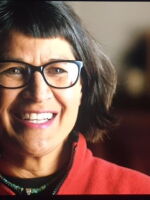
For High Plains History, I'm Debra Bolton of the Ohkay Owingeh/Dine and Ute Peoples.
—
High Plains History is a production of High Plains Public Radio.